Rooted in Sierra Leone. Every region. Every community.
Our strategy: 2027–2031Contact us
MCHFMaternal and Child
Health Foundation
Community ownership

What community ownership means in practice

Why local priorities, meaningful youth participation and trusted community networks are central to the MCHF approach.

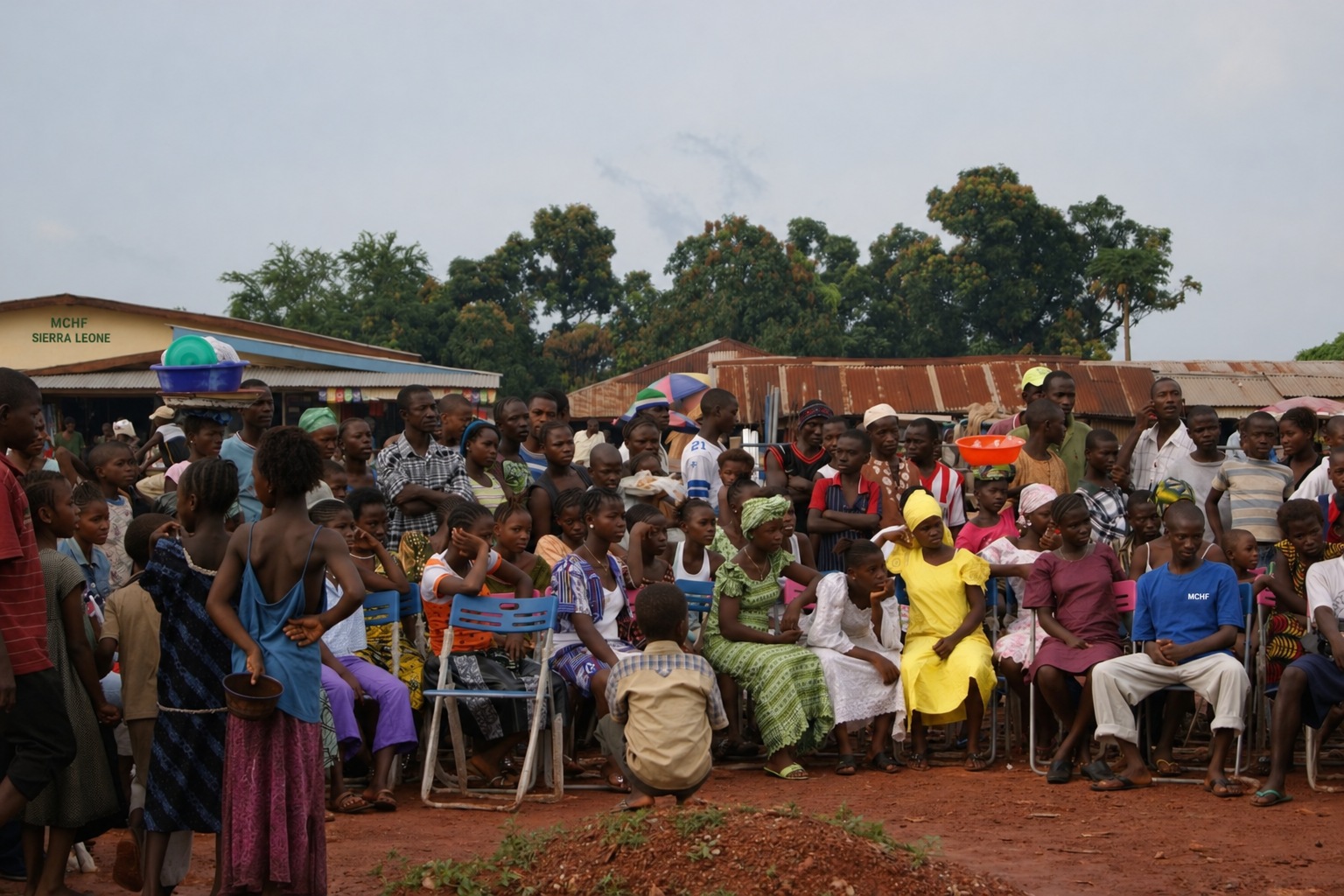
An audience attending a community health theatre performance in Mile 91, Sierra Leone
Community health education · Mile 91MCHF · Sierra Leone

Community ownership is one of the seven cross-cutting principles in MCHF’s Strategic Plan 2027–2031. It asks programmes to involve communities in identifying health priorities and developing practical, local solutions.

Meaningful participation goes beyond receiving information. The strategy provides for youth and community dialogues, engagement with women’s groups and local leaders, and platforms for adolescents and young people to contribute to programme decision-making.

Community champions and peer educators are another part of this approach. Planned activities include orientation, training and mentorship, peer-support initiatives, accurate health information and links to appropriate services.

Inclusion is essential. The framework calls for identifying social, geographical and economic access barriers and prioritising underserved and vulnerable communities in outreach and programme design.

These are strategic commitments. Confirmed projects, community stories and verified results will be published as implementation develops.

Related knowledge

UNDERSTAND THE APPROACH

What it means for communities to lead.

Community health is shaped by the information people receive, the services they can reach and the decisions they can influence. MCHF’s strategy includes participation, health literacy and equity together.

Four Black women listening and talking together around a table
MCHF · Programme imagery · Image credits
01

Health literacy

Health information becomes useful when people can understand it, ask questions and connect it with available services. The plan includes accessible materials, community dialogues and trusted peer educators.

02

Meaningful participation

People contribute more than attendance. Youth, women’s groups, local leaders and underserved groups can help identify priorities, shape activities and provide feedback.

03

Equity in practice

Equity recognises that social, economic and geographical barriers are different for different groups. Programme design should identify those barriers and prioritise people who are underserved.

Framework: MCHF Strategic Plan 2027–2031 and institutional memorandum. This introduction explains the approach; it does not report completed programme results.

Explore the strategic priorities
BUILD SOMETHING THAT LASTS

Better health begins
with working together.

Bring your expertise, ideas and commitment.
Let’s turn shared purpose into lasting change.

Partner with MCHF